# Trade Schools vs Traditional College: Which Path Leads to Faster Career Success?
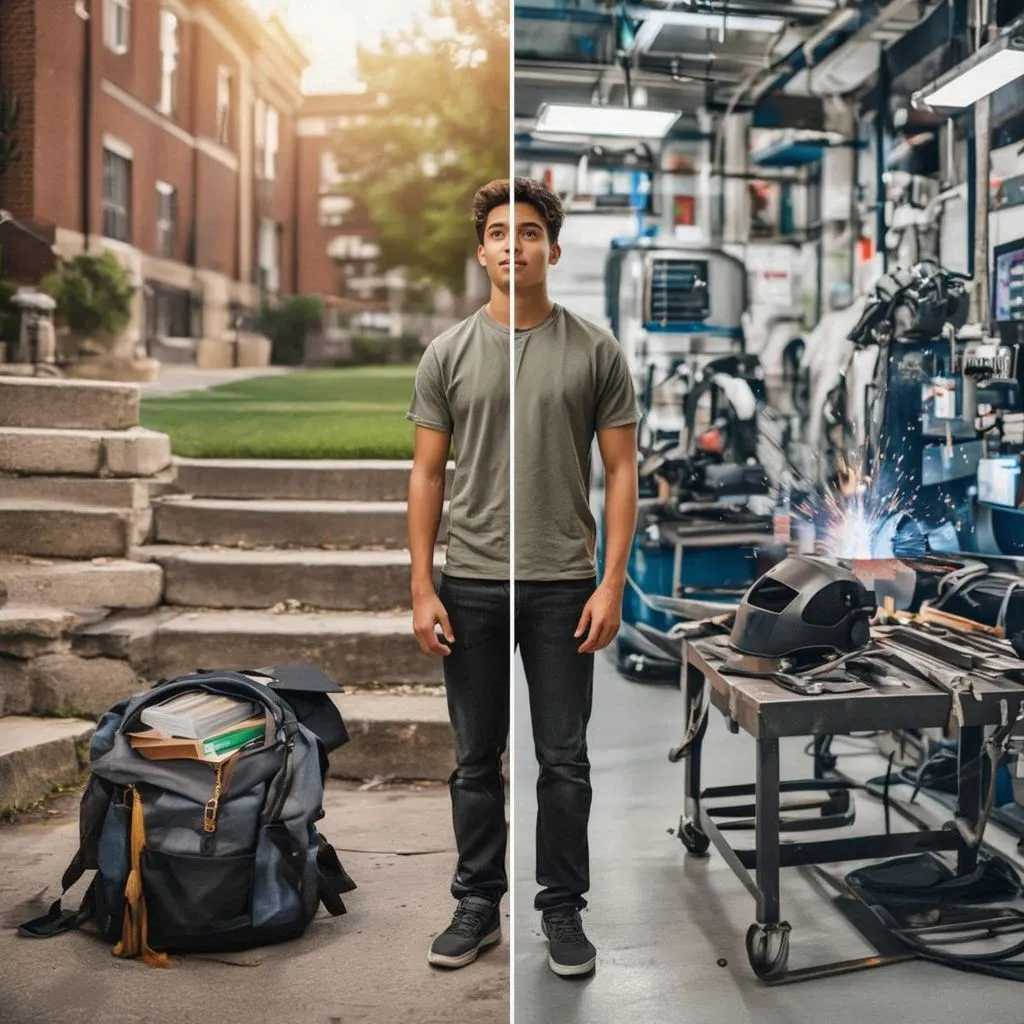
You want a career that pays well and starts soon. The real question is how fast you can get there. For many job seekers, the choice between trade schools and traditional college feels overwhelming, but the timeline and cost differences are clearer than most people think.
### The Real Timeline Behind Trade Schools Vs Traditional College
A bachelor’s degree typically requires four years of full-time study, and some students take even longer if they change majors or attend part time. That often means waiting years before earning a steady, full-time income in your chosen field. In contrast, many trade programs can be completed in 6 to 24 months. They focus on job-specific skills instead of broad general education courses, helping students enter high-demand technical and healthcare roles much sooner.
### The Cost Conversation Most People Avoid
College tuition has risen steadily, and recent data from BestColleges shows that annual costs at four-year schools can reach tens of thousands of dollars. Over four years, that often leads to significant student debt. Trade schools usually cost less because programs are shorter and career-focused. Students can start working sooner, earning income instead of adding loans. When you compare time in school with total debt, the impact becomes personal and directly tied to your financial stability.
### Job Readiness And Hands On Experience
Traditional colleges focus on theory and are essential for careers like law or engineering. However, not every rewarding job requires four years in a classroom. Trade programs emphasize hands-on, [job-specific training](https://eztalks.com/online-education/the-importance-of-training-and-development-in-the-workplace.html), helping students move smoothly from labs and workshops into real workplaces.
Here is what trade-focused training typically emphasizes:
* Practical skills tied directly to in-demand jobs
* Industry certifications that boost employability
* Instructors with real field experience
For people who learn best by doing rather than by simply listening, this hands-on approach can unlock confidence quickly. Employers also appreciate candidates who can easily step in and contribute from day one.
### Local Impact And Real Stories Of Change
In Texas, hands-on training has helped many career changers rebuild their confidence and income. Some students who once felt stuck in low-wage jobs found new direction after enrolling in programs like the [trade schools in Arlington](https://www.stvt.edu/campuses/texas/arlington). They gained technical skills, earned certifications, and moved into stable roles that offered growth instead of dead ends.
STVT campuses across Texas focus on career-driven programs designed to meet employer demand. Students train for roles in fields such as HVAC, medical assisting, and welding, where skill and reliability matter more than a lengthy academic transcript. Graduates often describe the experience as a turning point because it replaced uncertainty with a clear path forward.
That kind of transformation is not theoretical. It shows up in steady paychecks, better schedules, and renewed pride in work.
### Weighing Long Term Earnings And Growth
Research from the Georgetown University Center on Education and the Workforce confirms that higher education levels are linked to higher lifetime earnings on average. Bachelor’s degree holders often out-earn those with only a high school diploma. However, some certificate and associate degree holders in technical fields also achieve strong wage growth over time.
The key is alignment. If a four-year degree is required for your dream role, it is worth the investment. If your goal is to enter a skilled trade quickly and start building experience, a focused program may deliver faster results and competitive pay.
Speed matters, but fit matters more. Choosing a path that matches your strengths, interests, and financial reality will always beat following a crowd.
### Choosing The Fastest Path To Career Success With Trade Schools Vs Traditional College
Trade schools vs traditional college is not about right or wrong. It is about clarity and direction. If you want a quicker launch into the workforce with hands-on training, a trade program can offer real momentum.
If you are exploring your next move in Texas, take time to research programs, visit campuses, and ask questions about job placement support. STVT provides career-focused options designed to help students move from training to employment with confidence. Explore their program pages or reach out through their contact page to see which path aligns with your goals, and share your thoughts in the comments if you are weighing trade schools vs traditional college right now.
---
# Agent Instructions: Querying This Documentation
If you need additional information that is not directly available in this page, you can query the documentation dynamically by asking a question.
Perform an HTTP GET request on the current page URL with the `ask` query parameter:
```
GET https://eztalks.gitbook.io/blog/education/trade-schools-vs-traditional-college-which-path-leads-to-faster-career-success.md?ask=
```
The question should be specific, self-contained, and written in natural language.
The response will contain a direct answer to the question and relevant excerpts and sources from the documentation.
Use this mechanism when the answer is not explicitly present in the current page, you need clarification or additional context, or you want to retrieve related documentation sections.