# The Definitive Guide to LMS Software Development in 2025
The global Learning Management System (LMS) market is not just growing; it's exploding. Projections show the market size soaring from over $28 billion in 2025 to more than $123 billion by 2033, driven by a compound annual growth rate (CAGR) of over 20% . This rapid expansion reflects a fundamental shift in how organizations approach training, education, and professional development in a digital-first world.
While off-the-shelf LMS solutions offer a quick entry point, a growing number of organizations are discovering their limitations. Generic features, rigid workflows, and a one-size-fits-all approach often fail to meet specific business needs, leading to a surge in demand for custom-built platforms. Building a custom platform requires a deep understanding of modern technologies and learning methodologies. Engaging with experts in [lms software development](https://anyforsoft.com/e-learning/lms-development/) can transform a concept into a scalable, high-impact learning ecosystem that delivers tangible results.
This guide provides a comprehensive roadmap for developing a modern LMS in 2025. We will explore critical architectural decisions, key technology stacks, must-have features, and the best practices that underpin a successful, future-proof learning platform.
### Why Custom LMS Development is Gaining Traction
The decision to build versus buy is a critical one. While pre-packaged LMS platforms can be deployed quickly, their inherent constraints often become roadblocks to growth and innovation. Custom development, though a more significant initial investment, offers unparalleled advantages that align with long-term strategic goals.
* **Tailored User Experience (UX):** A custom LMS can be designed from the ground up to match the specific workflows and learning styles of your audience, whether they are employees, students, or customers. This leads to higher engagement and better learning outcomes.
* **Seamless Integration:** Off-the-shelf solutions often have limited or costly integration capabilities. A custom build allows for deep, seamless integration with your existing tech stack, including HRIS, CRM, e-commerce platforms, and proprietary tools, creating a unified data ecosystem.
* **Scalability and Performance:** Custom architecture is designed to scale with your organization. You control the infrastructure, ensuring the platform can handle growth in users, content, and concurrent activity without performance degradation.
* **Full Data Ownership and Security:** Building your own LMS gives you complete control over your data, security protocols, and compliance with industry-specific regulations like HIPAA or GDPR.
* **Competitive Advantage:** A unique, feature-rich learning platform can become a key differentiator, enhancing your brand and providing a superior experience that competitors cannot easily replicate.
### Core Architectural Decisions in LMS Development
The foundation of a scalable and resilient LMS lies in its architecture. The choices made at this stage will dictate the platform's flexibility, performance, and long-term maintainability. In 2025, several architectural patterns dominate the landscape.
#### Monolithic vs. Microservices Architecture
The most fundamental architectural choice is between a monolithic and a microservices-based approach. While monoliths are simpler to develop initially, microservices offer superior scalability and flexibility, making them the preferred choice for modern, large-scale applications.
| Dimension | Monolithic LMS | Microservices LMS |
| ---------------------------- | -------------------------------------------------------------------------------------------------------------------------------------- | ------------------------------------------------------------------------------------------------------------------------------------------- |
| **Structure** | A single, tightly-coupled application where all components (user management, courses, analytics) are part of one codebase. | A collection of small, independent services, each responsible for a specific business function (e.g., authentication, content delivery). |
| **Scalability** | The entire application must be scaled together, even if only one feature is experiencing high traffic. This is inefficient and costly. | Each service can be scaled independently, allowing for precise resource allocation based on demand. |
| **Development & Deployment** | Updates are slow and risky, as a change in one part can affect the entire system. Downtime is often required for deployments. | Teams can develop, deploy, and update services independently, enabling faster release cycles and continuous integration/deployment (CI/CD). |
| **Fault Tolerance** | A failure in one component can bring down the entire application. | Failure in one service does not impact others, leading to higher overall system resilience. |
| **Technology Stack** | Locked into a single technology stack for the entire application. | Allows for polyglot development, where each service can use the most appropriate technology for its specific task. |
#### Cloud-Native and Serverless Approaches
Modern LMS platforms are built for the cloud. Leveraging cloud providers like Amazon Web Services (AWS), Microsoft Azure, or Google Cloud Platform (GCP) provides access to a suite of services designed for scalability, reliability, and global reach.
* **Containerization (Docker & Kubernetes):** Packaging services into Docker containers ensures consistency across development, testing, and production environments. Kubernetes orchestrates these containers, automating deployment, scaling, and management, which is essential for a microservices architecture.
* **Serverless Computing (AWS Lambda, Azure Functions):** For certain tasks, such as processing uploads, sending notifications, or running analytics jobs, a serverless model can be highly cost-effective. With serverless, you only pay for the compute time you consume, and the cloud provider handles all server management.
#### Database Choices: SQL vs. NoSQL
The choice of database technology depends on the type of data being managed. Most complex LMS platforms benefit from a hybrid approach:
* **SQL (Relational) Databases:** Systems like PostgreSQL or MySQL are ideal for structured data with well-defined relationships. This includes user profiles, course structures, enrollments, and grades. Their support for ACID transactions ensures data integrity, which is crucial for these core entities.
* **NoSQL (Non-relational) Databases:** Systems like MongoDB or Cassandra excel at handling large volumes of unstructured or semi-structured data. They are perfect for storing user activity logs, tracking interactions (xAPI statements), and managing large content repositories. Their horizontal scalability makes them a great fit for big data and real-time analytics.
### Must-Have Features and Development Focus Areas for 2025
A modern LMS is more than just a content repository. It's an intelligent, interactive, and integrated platform. Based on current trends and the services offered by leading developers, here are the essential features to prioritize.
#### AI-Powered Personalization and Automation
Artificial Intelligence is the single biggest trend transforming the LMS landscape. According to a recent report, 30% of L\&D teams are already using AI-powered tools, with 91% of them planning to increase their usage . Key AI capabilities include:
* **Adaptive Learning Paths:** AI algorithms analyze learner performance and behavior to create personalized learning journeys, automatically suggesting relevant content or adjusting difficulty levels.
* **Generative AI for Content Creation:** AI tools can assist instructors by generating quiz questions, summarizing long texts, creating course outlines from existing documents, and even producing draft lesson content.
* **Predictive Analytics:** By analyzing data, AI can identify at-risk learners, predict future skill gaps, and recommend proactive interventions, helping organizations refine their training strategies.
* **Intelligent Chatbots:** AI-powered virtual assistants can provide 24/7 support to learners, answering common questions and guiding them through the platform.
#### Mobile-First and Responsive Design
With a significant portion of learning happening on the go, a mobile-first approach is non-negotiable. A responsive design ensures that all content, from video lectures to interactive quizzes, renders perfectly on any screen size. This approach reduces drop-off rates and encourages consistent engagement by allowing learners to seamlessly switch between devices.
#### Robust Integrations and API-First Design
An LMS should not be an island. An API-first design allows it to function as the central hub of a connected learning ecosystem. Essential integrations include:
* **HR & Identity Systems:** Integration with HRIS (e.g., Workday, SAP SuccessFactors) and Single Sign-On (SSO) providers (using SAML or OpenID Connect) automates user provisioning and simplifies access.
* **CRM and Sales Tools:** Connecting with platforms like Salesforce enables targeted sales training and allows for tracking the impact of training on sales performance.
* **Content and Communication Tools:** Integration with video conferencing software (Zoom, Microsoft Teams), content authoring tools, and collaboration platforms (Slack) embeds learning into the flow of work.
* **E-commerce and Payment Gateways:** For organizations selling courses, integration with Shopify, PayPal, or Stripe is essential for managing transactions.
#### Advanced Analytics and Reporting
Data is the key to optimizing learning effectiveness. A custom LMS should provide a powerful analytics engine with customizable dashboards. Administrators and instructors need to track more than just completion rates. Key metrics include learner engagement, proficiency levels, time-to-completion, assessment scores, and content effectiveness. These insights enable data-driven decisions to improve courses and demonstrate the ROI of training initiatives.
#### Security and Compliance by Design
Security cannot be an afterthought. A secure LMS is built on a foundation of best practices:
* **Role-Based Access Control (RBAC):** Granular permissions ensure that users (students, instructors, admins) can only access the data and functionality relevant to their role.
* **Data Encryption:** All sensitive data should be encrypted both in transit (using TLS) and at rest to protect against breaches.
* **Compliance with Standards:** The platform should adhere to key industry standards, including e-learning standards like SCORM and xAPI, as well as accessibility standards like Web Content Accessibility Guidelines (WCAG) 2.1 AA to ensure inclusivity.
### The User Experience (UX) Imperative
Ultimately, the success of an LMS hinges on its user experience. A platform that is clunky, confusing, or visually unappealing will drive users away, regardless of its technical sophistication. According to Docebo research, 61% of L\&D professionals are frustrated by poorly designed platforms .
**Key Principles for Superior LMS UX Design:**
1. **Intuitive Navigation:** Learners should always know where they are, where they've been, and where to go next. Clear menus, breadcrumbs, and progress indicators are essential.
2. **Minimalist and Focused Interface:** A clean, uncluttered design minimizes cognitive load and allows learners to focus on the content. Distractions should be eliminated.
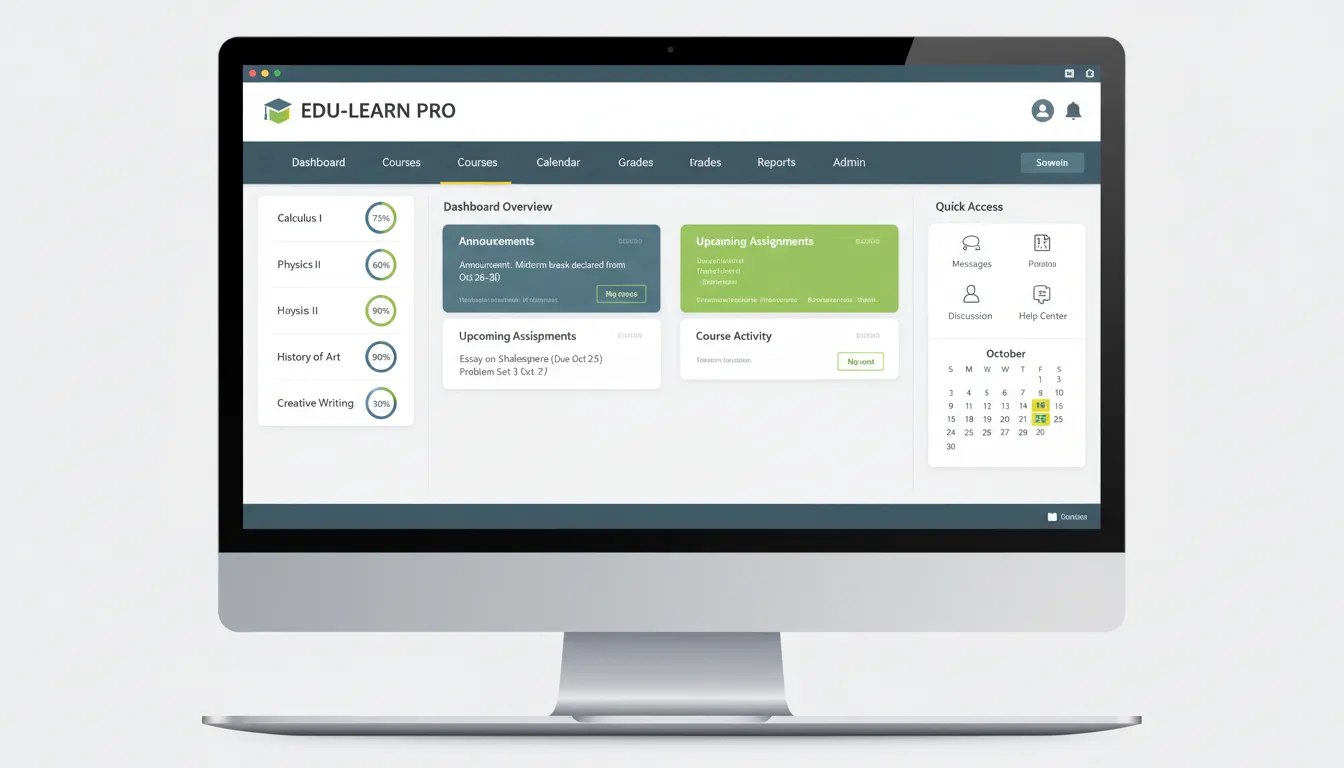
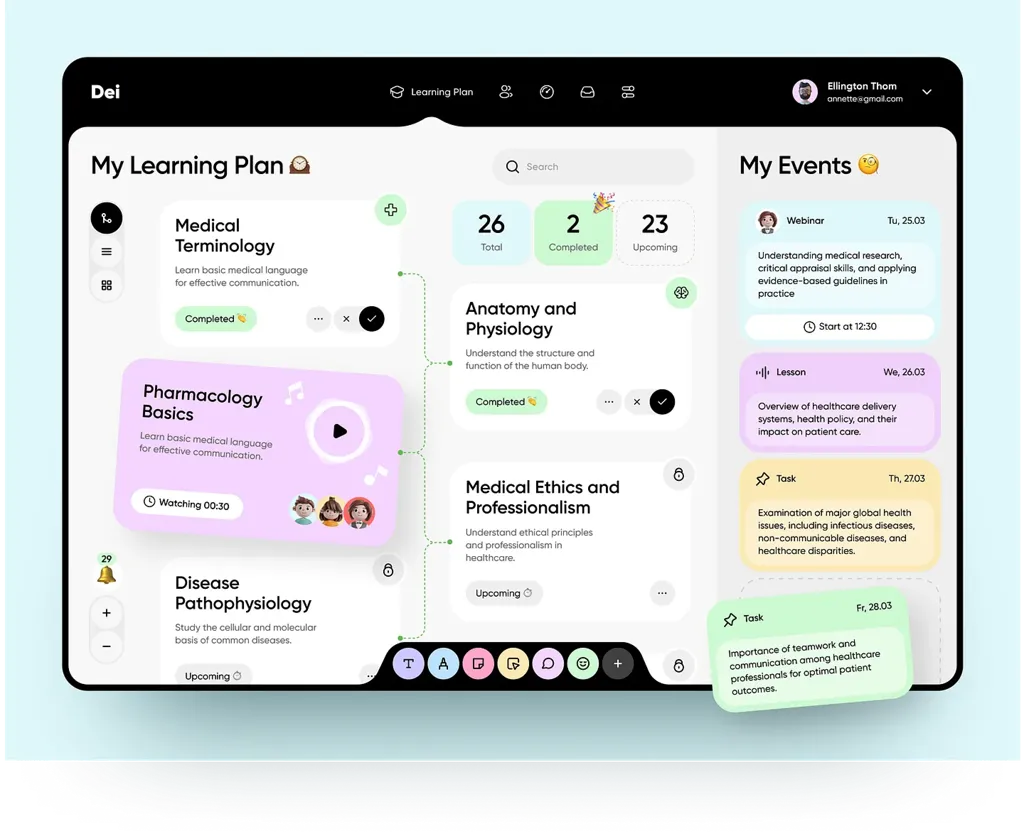
3. **Personalized Dashboards:** Each user's dashboard should surface the most relevant information for them, such as current courses, upcoming deadlines, and recommended content.
4. **Engaging Interaction Patterns:** Incorporate elements like gamification (badges, points, leaderboards), social learning features (forums, peer reviews), and interactive content (quizzes, simulations) to boost motivation and retention.
5. **Accessibility for All:** Design should be inclusive from the start, adhering to WCAG principles to ensure the platform is usable by people with diverse abilities.
### Conclusion: Building the Future of Learning
Developing a custom Learning Management System in 2025 is a strategic investment in an organization's future. It's an opportunity to move beyond the constraints of generic software and create a learning environment that is truly tailored, scalable, and impactful.
By focusing on a modern microservices architecture, leveraging the power of AI and data analytics, prioritizing a seamless user experience, and ensuring robust security and integrations, organizations can build a platform that not only meets today's training needs but is also ready for the challenges and opportunities of tomorrow. The journey from concept to a live system is complex, but with careful planning and the right technical expertise, the result is a powerful engine for growth, engagement, and continuous learning.
---
# Agent Instructions: Querying This Documentation
If you need additional information that is not directly available in this page, you can query the documentation dynamically by asking a question.
Perform an HTTP GET request on the current page URL with the `ask` query parameter:
```
GET https://eztalks.gitbook.io/blog/education/the-definitive-guide-to-lms-software-development-in-2025.md?ask=
```
The question should be specific, self-contained, and written in natural language.
The response will contain a direct answer to the question and relevant excerpts and sources from the documentation.
Use this mechanism when the answer is not explicitly present in the current page, you need clarification or additional context, or you want to retrieve related documentation sections.