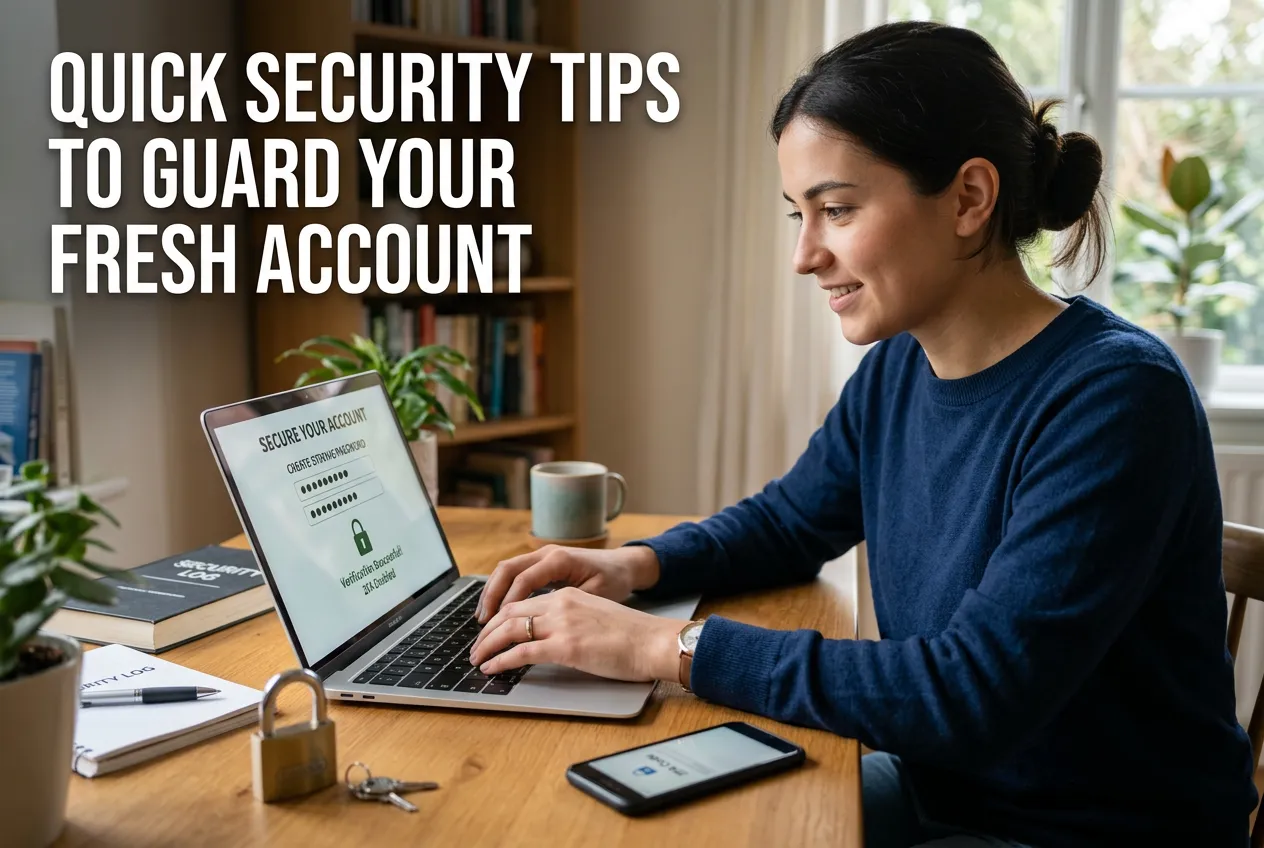
# Quick Security Tips to Guard Your Fresh Account
A new bank account represents a new financial chapter in your life, whether that be starting college, beginning a side business or just starting to manage your own money for the first time. This "fresh start" feels productive and has a lot of potential; however, it also creates a time period in which good security habits are vital.
Often, fraud occurs on new accounts due to the fact that the typical user has not yet established any habits of activity on their account, therefore making it more likely for an instance of fraud to take advantage of them having not yet set up their security measures. Therefore, taking some proactive measures early on will ultimately provide peace of mind and help you avoid an unnecessary amount of worry later.
### **1. Strengthen Access from Day One**
Your password is your first line of defense. Avoid using birthdays, simple number patterns, or reused passwords from social media accounts. Create a long, unique passphrase that combines unrelated words, numbers, and symbols.
Enable two-factor authentication immediately. This extra verification step significantly reduces unauthorized access, especially if you manage both student and business income through digital banking platforms.
If you are managing finances as a student while running freelance work or a small project, keep accounts separate. Mixing transactions increases confusion and raises the risk of overlooking suspicious activity.
### **2. Turn On Real-Time Alerts**
Security is more than just preventing issues; it also involves understanding them.
Create instant alerts for all transactions, low balances, attempted logins, and profile updates. Alerts can help you identify unusual expenses sooner than later and allow you to take action before small issues grow into larger financial problems.
Students often balance many monthly payments (tuition, subscriptions, etc.) and everyday spending. Similarly, small business owners use alert notifications to stay up to date with invoices and customer transfers. Real-time alerts create transparency for both student and [business transactions](https://eztalks.com/how-to/setting-up-your-business-bank-account-a-6-step-guide-for-llcs.html).
### **3. Monitor Transactions Weekly**
Checking your balance occasionally is not enough. Schedule a weekly review of transactions, even if everything appears normal.
Look for:
● Small unfamiliar charges
● Duplicate transactions
● Subscription renewals you no longer use
● Unexpected international fees
If you recently opened your account for campus life or a new venture, early monitoring establishes a habit of accountability. This practice protects both personal funds and business revenue.
### **4. Separate Academic and Business Finances**
Students launching online shops, tutoring services, or freelance gigs often deposit everything into one account. This approach complicates budgeting and increases risk exposure; if you recently chose to [open an international student bank account](https://www.sofi.com/banking/students/international-student-bank-account/) for tuition payments and daily living expenses, consider keeping it dedicated to academic use. A separate account for business activity creates clearer records and limits the impact of potential fraud. If one account faces a security issue, your primary student funds remain protected.
This separation strengthens both security and financial organization as your responsibilities grow.
### **5. Be Cautious with Public Wi-Fi**
Campus networks and coffee shops make studying convenient, yet they also introduce risk. Avoid logging into your banking app over unsecured public Wi-Fi. If necessary, use a trusted virtual private network and log out immediately after completing transactions.
Never store banking passwords in shared devices. Even brief access can expose sensitive information.
### **6. Protect Personal Information**
Phishing attempts often target students and new entrepreneurs through email or text messages claiming account problems or urgent verification requests.
Verify directly through your bank’s official app or website instead of clicking unknown links. Financial institutions rarely request sensitive information through unsolicited messages.
The moment you open a new account is when scammers assume you are less familiar with standard communication patterns. Awareness prevents costly mistakes.
### **7. Keep Software Updated**
Outdated apps and operating systems create vulnerabilities. Enable automatic updates on your banking app and mobile device to maintain the latest security patches.
This simple habit strengthens your protection without requiring constant attention.
### **Build Security Into Your Routine**
Security should not feel like a one-time setup. It works best as an ongoing routine integrated into your financial management habits.
Students managing tuition and living expenses benefit from structured monitoring. New business owners handling client payments need reliable oversight. In both cases, consistent review, account separation, and proactive alerts reduce risk while supporting financial growth.
A fresh account represents opportunity. Protecting it from the beginning ensures that your academic goals, side projects, and long-term plans move forward without unnecessary disruption.
---
# Agent Instructions: Querying This Documentation
If you need additional information that is not directly available in this page, you can query the documentation dynamically by asking a question.
Perform an HTTP GET request on the current page URL with the `ask` query parameter:
```
GET https://eztalks.gitbook.io/blog/tech/quick-security-tips-to-guard-your-fresh-account.md?ask=
```
The question should be specific, self-contained, and written in natural language.
The response will contain a direct answer to the question and relevant excerpts and sources from the documentation.
Use this mechanism when the answer is not explicitly present in the current page, you need clarification or additional context, or you want to retrieve related documentation sections.